
Blog
Beyond the Throw Rug: How Home Health PT and OT Turn Fall Risk Findings Into a Practical Plan
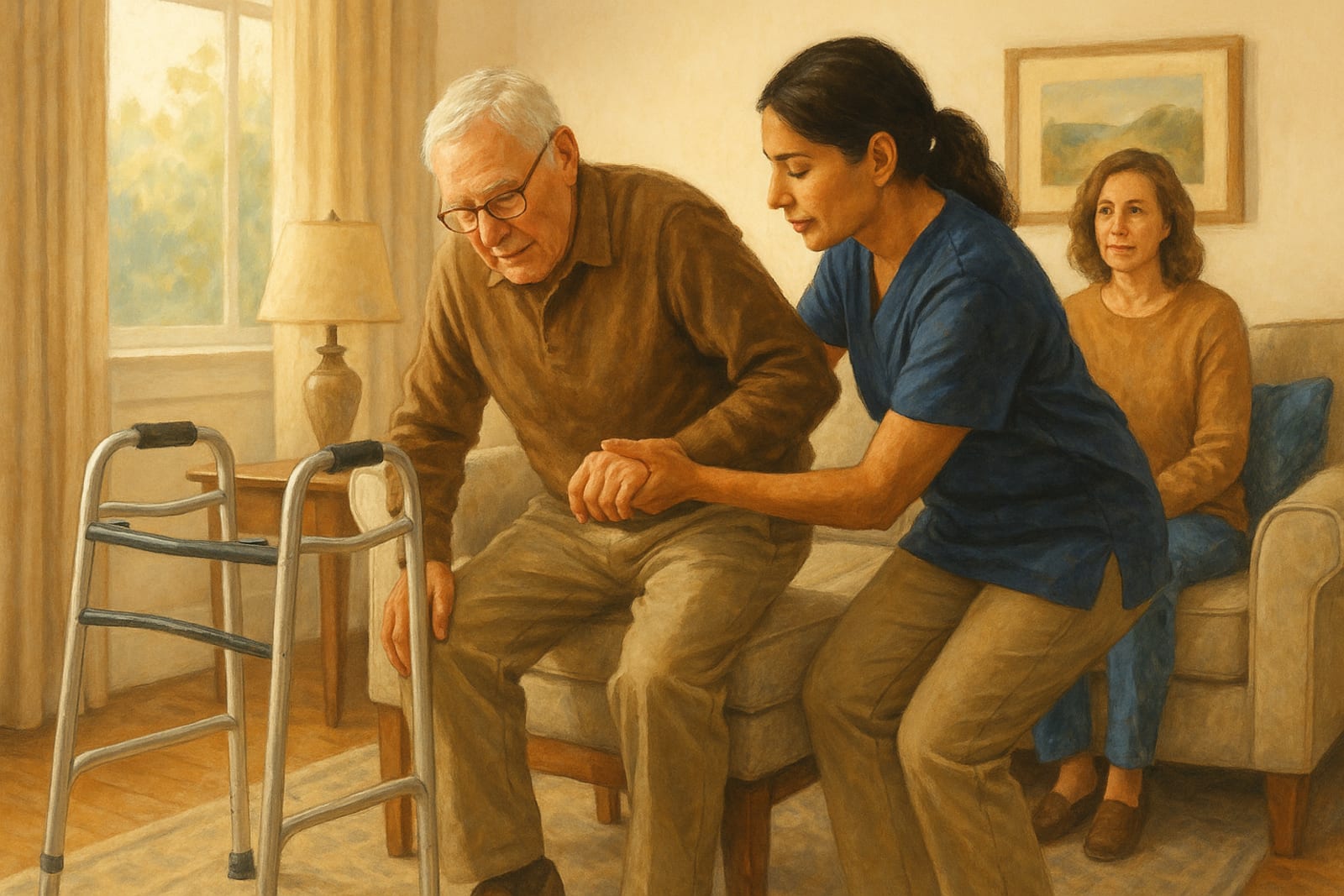
Beyond the Throw Rug: How Home Health PT and OT Turn Fall Risk Findings Into a Practical Plan
A home health fall risk assessment does more than flag a loose rug or a missing grab bar. When a physical therapist (PT) and occupational therapist (OT) evaluate your loved one at home, they look at how the person actually moves, stands, transfers, bathes, gets dressed, and reaches for everyday items. The findings should connect to a plan with clear priorities, assigned actions, and follow-up dates the patient and family understand. Here is how that process works, what each discipline contributes, and what your family should ask to make sure a checklist on paper becomes a plan that actually reduces risk.
What Happens After Someone Notices a Fall Risk?
Fall prevention starts with recognizing the problem, but recognition alone does not reduce risk. The CDC's STEADI framework organizes fall prevention around three steps: screen, assess, and intervene. Screening is the opening question: Has the person fallen in the past year? Do they feel unsteady? Are they worried about falling? A "yes" to any of those questions signals that a clinician should dig deeper.
The deeper look is where most families expect someone to walk through each room and point at hazards. That is part of it, but it is not the whole picture. The STEADI algorithm lists several areas a multifactorial assessment may include:
- Gait, strength, and balance
- Medications that may contribute to dizziness or unsteadiness
- Orthostatic blood pressure (changes when standing up)
- Vision
- Feet and footwear
- Home hazards
- Underlying health conditions
The point is not to hunt for one guilty object. A throw rug matters, but so might a poorly positioned walker, a bathtub without a safe entry strategy, dizziness after standing too quickly, weakened legs, or shoes with worn-out soles. A useful assessment looks at the whole person in the context of where and how they live.
Why Federal Rules Require a Patient-Specific View
Federal home health regulations reinforce this. Under 42 CFR 484.55, a Medicare-certified home health agency must conduct a comprehensive assessment that reflects the patient's health status, functional abilities, cognitive status, goals, care preferences, medications, caregiver availability, equipment needs, and daily activities. That is why a good assessment begins with the person, not with a generic room-by-room form printed off the internet.
Every patient brings a different combination of medical history, living situation, family support, and daily routine. A fall-risk plan that works for a 78-year-old recovering from a hip replacement looks nothing like the plan for a 65-year-old managing Parkinson's. The assessment has to reflect that, and the plan that follows has to be specific enough that the patient and family know exactly what to do between visits.
What Does a Home Health Physical Therapist Look For?
PT is the movement side of the picture. A physical therapist evaluating fall risk typically focuses on gait, strength, balance, and safe movement patterns. In plain language, that means watching how the person gets out of a chair, steadies themselves, starts walking, navigates a turn, and sits back down. The therapist may use a structured clinical test, but the family should also understand what the result means in the context of daily life.
Connecting Findings to Daily Movements
A slower chair rise might point to a need for leg-strengthening exercises or a safer transfer technique. Trouble turning in a narrow hallway may affect the path from the bedroom to the bathroom at 2 a.m. Unsteadiness while using a walker could mean the device needs adjustment, the technique needs correction, or both. These are the kinds of questions a PT may work through during a home health visit.
The next step should be tied to a specific, understandable goal. "Improve balance" is too vague for a family trying to help between visits. "Practice the sit-to-stand transfer the therapist demonstrated, using the armrests, three times each morning" gives the family something concrete. If an exercise, device change, or environmental modification is recommended, ask:
- Who is responsible for making the change?
- Is this something the family handles, or does it require a professional or supplier?
- How will progress be checked, and when?
These questions matter because a finding without a follow-up plan is just an observation. The therapist should be able to explain how each recommendation connects to the patient's actual daily routine, not just to a clinical benchmark.
What PT Does Not Cover
Physical therapy is focused on movement, strength, and balance. It is not designed to solve every fall-risk factor. Medication concerns, vision problems, and blood pressure changes belong to the treating physician or other appropriate clinicians. A good PT flags those concerns and communicates them to the rest of the care team, but the therapist is not the one who adjusts a prescription or orders new glasses.
What Does a Home Health Occupational Therapist Look For?
OT focuses on the activities that fill a person's day. That includes getting dressed, using the bathroom, preparing a simple meal, reaching into a cabinet, moving through a doorway, and getting in and out of a favorite chair. The STEADI algorithm specifically points to occupational therapy when home hazards are identified as a contributing factor to fall risk.
Why the Home Setup Changes Everything
A task that is safe in one environment can be risky in another. A bathroom may need a different approach depending on the layout, the height of the toilet, whether there is a step into the shower, and whether there is anything to hold onto. A frequently used item stored too high forces reaching and stretching that may be unsafe. A chair that is too low makes standing up harder than it needs to be. A pathway that looks clear may still be too narrow for a walker.
The OT evaluates these situations and works with the patient to find practical solutions. Sometimes that means rearranging where items are stored. Sometimes it means recommending adaptive equipment. Sometimes it means teaching the patient a different way to perform a task that reduces the risk of losing balance.
Drawing the Line Between Recommendations and Actions
A strong agency should explain which concerns are clinical recommendations the therapist will address, which are changes the family can make independently, and which need another professional or supplier. Grab-bar installation, for example, requires proper mounting to be safe. A family member watching a YouTube video and putting one in the wrong spot or with the wrong hardware could create a false sense of security. When the OT recommends a modification, ask who should handle it and whether there are specific requirements.
Families should not guess at equipment placement, alter medical devices, or change a medication based on what they observed during a therapy visit. When in doubt, ask the clinician or the treating provider.
How Should Separate Findings Become One Practical Plan?
This is where many families feel lost. The PT found balance issues. The OT flagged bathroom hazards. The nurse noted a medication that may contribute to dizziness. These are separate observations from separate clinicians. The question families need answered is: what do we do first, and who is handling what?
A useful plan connects four things:
- The finding (weak balance during turns)
- The daily consequence (trouble navigating the bathroom doorway safely)
- The action (PT exercises to strengthen balance, OT review of the route and possible equipment)
- The follow-up (when the team will reassess and what progress looks like)
Medications Belong in the Conversation, Not in the Family's Hands
The CDC includes medication review in the STEADI framework because certain medicines may contribute to fall risk through dizziness, drowsiness, or blood pressure changes. Therapists and families should not independently stop or change a prescription. The right response is to flag the concern for the clinician who can review the medication list and coordinate with the prescribing provider. If your loved one's PT or OT mentions a medication concern, make sure it gets communicated to the physician.
Caregiver Capacity Has to Be Part of the Plan
A plan that assumes a family member is available every morning will fail if that person works an early shift. Federal assessment rules under 42 CFR 484.55 call for the agency to consider a caregiver's willingness, ability, availability, and schedule. Be direct with the care team about what help is and is not realistic. If there are hours when no one is home, the team needs to know so the plan accounts for that gap.
A Fall-Risk Conversation Checklist for Families
Use this list to guide a conversation with the home health team. It is not a substitute for a patient-specific assessment.
- Share every fall in the past year, including near-misses and whether there was an injury
- Mention any unsteadiness, dizziness, or worry about falling
- Keep an accurate, current medication list available for review
- Ask what the PT found about gait, strength, balance, and transfers
- Ask what the OT found about bathing, dressing, meal tasks, and room setup
- Review footwear, walking devices, bathroom access, lighting, and common routes through the home
- Identify the two or three changes that matter most right now
- Write down who will handle each change and by when
- Ask which exercises or techniques are safe to practice between visits
- Confirm when the team will reassess progress
- Tell the agency when caregiver help is limited or unavailable
- Direct medication or medical questions to the treating provider rather than making changes independently
How Does Medicare Skilled Home Health Fit Into Fall Prevention?
Families often confuse skilled home health with private-duty caregiving. They are different services. Medicare home health can cover part-time or intermittent skilled nursing, physical therapy, occupational therapy, speech-language pathology, and certain other services when the person meets eligibility conditions. Those conditions include a qualifying skilled need, a physician's order and plan of care, use of a Medicare-certified home health agency, and homebound status.
What Homebound Actually Means
Homebound does not mean a person can never leave the house. It means the person is normally unable to leave home and that leaving requires a considerable and taxing effort because of illness or injury. Medical appointments, church, and some short, infrequent nonmedical outings can still fit the rule. Driving yourself to the grocery store or the beach is where Medicare draws the line.
What Medicare Does Not Cover
Medicare does not cover 24-hour care at home, meal delivery as a standalone service, unrelated homemaker services, or custodial personal care when personal care is the only need. If your loved one needs daily help with cooking, bathing assistance beyond what a skilled plan addresses, transportation, or companionship, that falls into private-duty or non-skilled care territory. A family may need skilled home health, private-duty help, or both, but they should not be described as the same thing.
The CMS Medicare payment systems overview describes the home health payment framework that includes skilled services such as nursing, PT, OT, and speech-language pathology. Understanding this helps families set realistic expectations about what visits will look like and how long they last.
What Families Ask Most Often About Fall-Risk Care
Does removing hazards prevent every fall?
No. Home hazards are one factor in a larger picture. The CDC's STEADI framework also evaluates gait, strength, balance, medications, blood pressure changes, vision, footwear, and health conditions. Removing a rug matters, but it does not address weak legs or dizziness from a medication side effect. A patient-specific plan should address the factors that apply to that individual.
Is physical therapy the only therapy involved in fall prevention?
Not necessarily. PT may address movement, gait, strength, and balance. OT may evaluate home safety and how daily activities are performed. The specific disciplines ordered depend on the patient's condition, needs, and plan of care. In many cases, both contribute meaningfully to reducing fall risk.
Can a family member change exercises or equipment after watching a visit?
Families should follow the specific instructions given for their loved one and ask before modifying the routine or equipment setup. What is safe for one person may not be safe for another. If something feels unclear or seems like it is not working, bring it up with the therapist at the next visit rather than improvising.
Does Medicare pay for someone to stay all day?
No. Medicare home health is not round-the-clock attendance. Medicare specifically excludes 24-hour care at home and custodial personal care when personal care is the only need. Ask what skilled visits are ordered and make a separate plan for daily non-skilled help if your loved one needs it.
What to Do Now
This Week
- Write down every fall or near-fall your loved one has had in the past year, including details about what they were doing, where it happened, and whether there was an injury.
- Gather the current medication list, including over-the-counter supplements, and have it ready for the next clinical visit.
- Walk through the home with fresh eyes. Note lighting, common walking paths, bathroom layout, frequently used furniture, and footwear your loved one actually wears.
This Month
- Ask the home health team for specifics. Do not settle for "we're working on balance." Ask what the PT found, what the OT recommended, what has priority, and who is handling each action item.
- Be honest about caregiver availability. If help is limited during certain hours or days, tell the team so the plan reflects reality.
- Confirm the follow-up schedule. Know when progress will be reassessed and what specific improvements the team is looking for.
This Quarter
- Review whether the plan is working. Are the exercises being practiced? Have recommended changes been made? Has the number of near-falls or balance concerns changed?
- Revisit the medication list with the treating provider, especially if new prescriptions have been added or symptoms like dizziness have changed.
- Evaluate ongoing needs. If skilled home health services are wrapping up, talk with the agency about whether non-skilled private-duty support makes sense for continued safety.
The Bottom Line
A home health fall risk assessment should do more than identify hazards. It should connect what the PT and OT find to the way your loved one actually lives, move by move, room by room, and produce a plan with clear actions, assigned responsibilities, and a schedule for reassessment. The families who get the most out of this process are the ones who ask specific questions and tell the care team what daily life actually looks like.
Have questions about whether skilled home health is the right fit for your loved one's situation? Start with the treating provider, then talk to a Medicare-certified home health agency that can walk through the assessment, the ordered services, and what the plan means in plain language. Reach out to Freedom Home Healthcare to learn how we can help.