Blog
More Than Physical Therapy: What Medicare Home Health Actually Includes
More Than Physical Therapy: What Medicare Home Health Actually Includes
When the discharge planner hands you a list of home health agencies and says "pick one," here is what nobody explains: those agencies are not all offering the same thing.
Plenty of agencies are built around one service, usually physical therapy. The referral says PT, they send a physical therapist, and that is the whole relationship. If it turns out your mother also needs help relearning how to safely make her own lunch, or her medications are a mess, or she is quietly not eating because getting to the store overwhelms her, that is somebody else's problem.
We built Freedom Home Health differently, and after enough years watching referrals come through, we can tell you why it matters. Recovery is almost never just one problem, so we answer it two ways: with a full team of clinicians, and with a few pieces of technology that extend what that team can do between visits and after hours. Here is a plain-English tour of who does what, how the technology fits, and how it all works together.
The Team, in Plain English
Every discipline below is part of skilled home health, which means Medicare covers it when there is a documented skilled need and a doctor's order, all under a single plan of care: the written roadmap your doctor signs that says what services you get, how often, and toward what goals.
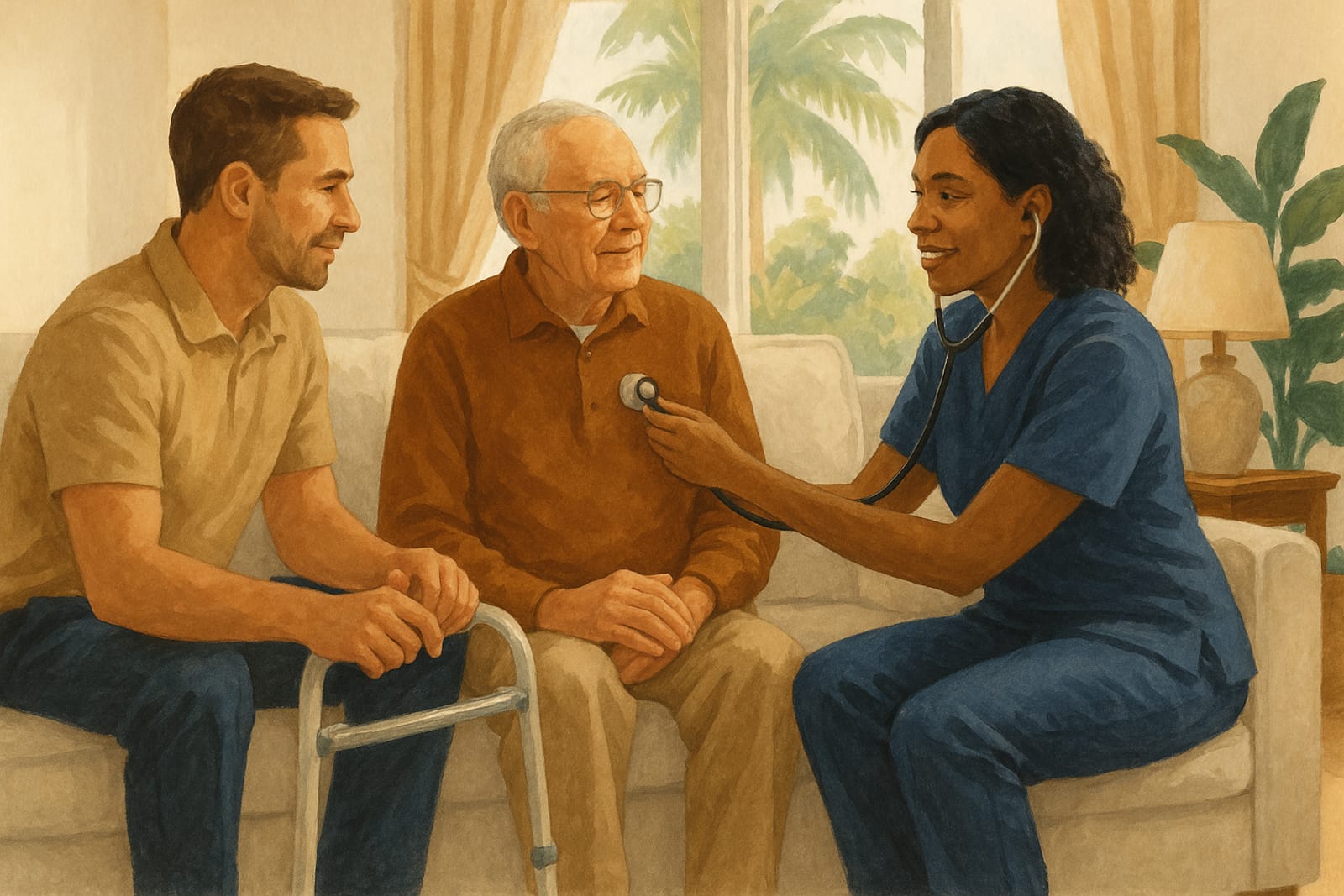
Skilled nursing. Registered nurses handle the medical side at home: wound care, medication management, monitoring a new diagnosis, catching the blood pressure trend or infection early, before it becomes a hospital readmission. For many patients, the nurse is the first clinician through the door and the one coordinating with the doctor as things change.
Physical therapy. PT is the hands-on movement work: strength, balance, walking, stairs, getting up from a chair safely. After a knee replacement, a fall, or a stroke, the physical therapist is rebuilding the body's ability to move through the world. This is also where the newest of those tools show up first, which we will come back to below.
Occupational therapy. The most misunderstood discipline in home health. Occupational therapy is not about your occupation. It is about the activities of daily living: getting dressed, bathing safely, standing at the counter long enough to make a sandwich, getting in and out of the car. PT gets you moving. OT gets you living. They are doing different jobs, and both matter.
Speech therapy. Speech-language pathologists work on communication after a stroke, and just as importantly, on swallowing, which is a safety issue most families have never had to think about until it is suddenly the whole ballgame. For conditions like Parkinson's, specialized speech programs help patients keep their voice strong and their swallowing safe.
Medical social work. The quiet hero of a good agency. The social worker untangles everything around the care: what community resources exist, how the family is coping, what happens when the money and the paperwork get complicated. Families rarely ask for the social worker by name. They are usually the visit people thank us for most.
Home health aides. Under the plan of care, aides help with bathing and personal care during the episode, working alongside the clinical team rather than instead of it.
Where the Technology Actually Fits
That is the team. As good as it is, no team can be in your home around the clock, which is exactly the gap the right technology fills. These tools do not replace a clinician or an aide. They make the human care better, and they give families peace of mind during the hours no one can be there. Two are worth understanding, because they solve different problems.
XR Health: Virtual Reality That Makes the Movement Stick
The math of home health is unforgiving. A physical therapist is in your home maybe three hours a week. The other 165 hours belong to the patient, usually with a paper sheet of exercises that is competing against pain, boredom, and a very comfortable recliner. The paper sheet usually loses, and recovery stalls, not because the therapy failed but because it stopped getting done.
Virtual reality therapy, through a company called XR Health, attacks exactly that gap. A lightweight headset comes to the home preloaded and ready to use, no setup for the family to wrestle with. It turns therapeutic movement into guided sessions and games, and the movements map to the same goals your therapist is already working on: reaching and range of motion, balance, motor coordination, upper and lower body. It is the same technology being used for stroke recovery and Parkinson's treatment, not a novelty.
The part that matters most for your recovery is not the headset. It is what happens behind it. XR Health runs on licensed clinicians who monitor progress remotely and adjust the plan of care based on what the sessions actually show. That is the difference between "did you do your exercises this week?" and a clinician watching your range of motion improve session by session, then progressing you when you are ready and easing off when something looks wrong. Sessions are designed to be done seated or with support, inside the safety guidance of your plan of care.
A straight answer on cost, because it is the first thing families ask. For some uses, a VR device is covered by Medicare as durable medical equipment. For others, VR-assisted rehab is delivered through your clinicians and your regular home health coverage. Which bucket you land in depends on the diagnosis, the documentation, and the plan. That is a conversation to have with your doctor and with us, not a promise to take from a blog post. What we will always tell you plainly is what a tool does, what it will cost you (often nothing), and why we think it fits your recovery.
Sensi: Confidence Your Loved One Is Safe in Their Own Home
For a lot of families, the hardest part of keeping a parent in their own home is the worry that comes with it. Even with a full care team, nobody is in the house 24 hours a day. The skilled clinician comes a few times a week. Even a private-duty aide, working long shifts, goes home eventually. The question underneath all of it is the same one: is Mom okay when I am not there?
Sensi is built so the answer to that question is reassurance instead of worry. It is an audio-based system, and the word audio matters: there are no cameras and no video, nothing pointed at your loved one, just small devices in a few key rooms. They learn your loved one's normal daily rhythm and pick up on the things that fall outside it: the sound of a fall, coughing or breathing that signals distress, a restless night, a day where the usual activity just is not happening. If something is wrong, the right people know right away, including the care team. If everything is fine, and most days it is, the family gets to feel that too.
That is the real value: peace of mind. It is what lets a parent stay in the home they love instead of moving somewhere just to be safe, because the safety is already there. And it does not only matter in the quiet hours. When an aide arrives for a morning shift, they are not starting blind. They already know your mother slept poorly, or that the cough that started Tuesday has not let up, so they walk in ready to help instead of guessing. Sensi gives families the confidence that their loved one is living safely at home, and it gives every caregiver the information to make the hours they are there count.
Why Having It Under One Roof Changes the Outcome
You could, in theory, assemble all of this from different providers. Here is what actually happens when the team works together and the tools report back to that same team.
The physical therapist doing your mother's start-of-care evaluation is not just counting steps to the bathroom. They are noticing the broken chair she uses to steady herself, the rug that is going to trip her, the fact that she seems confused about her medication schedule. At a single-service agency, those observations have nowhere to go. On a full team, the chair gets flagged, the nurse hears about the medications, the VR sessions get tuned to the balance problem the therapist flagged, what Sensi picks up reaches the same people planning the visits, and if the bigger picture looks shaky, a social work visit gets added with one phone call to the doctor, not a new referral to a new company.
That is continuity of care, and we will say it as plainly as we always do: continuity is what separates a good home health experience from a bad one. Not the brochure, not the star rating. Whether the people, and the tools, involved in your loved one's care are consistent, coordinated, and actually talking to each other.
What This Looks Like in Real Life
Take a common one: a stroke. Dad comes home with orders for PT. A single-service agency sends the physical therapist and stops there.
Our team walks in and sees the whole picture. PT rebuilds his walking and balance, and on the off days, short guided VR sessions keep him progressing so he does not show up to the next visit starting over. OT retrains the daily routines: dressing with one strong side, safe transfers, kitchen tasks. Speech therapy works on his word-finding and evaluates his swallowing so his wife stops lying awake listening to him cough at dinner. The nurse tracks his blood pressure and his new medications. The social worker helps his wife find a support group and sort out the insurance paperwork. And because she cannot sit up all night, Sensi gives her the reassurance to actually sleep, and flags the morning he starts getting unsteady again. Same agency. Same plan of care. Same episode of Medicare coverage.
And when the episode ends and Medicare's job is done, some families still need help with the everyday things: cooking, driving, companionship, a few hours of relief for the spouse. That is not skilled care, and Medicare does not cover it, so we are straightforward about it. Through our sister company, #1 Home Care Services, the handoff comes from a clinician your family already trusts, based on what they actually saw in the home. Those private-duty aides carry the same tools with them, so the security that kept your loved one safe during skilled care carries right over, and every caregiver who walks in the door knows what happened before they got there. No cold call, no starting over, and the same goal throughout: keep your loved one safe at home.
The Questions to Ask Before You Pick an Agency
If you are holding one of those discharge lists right now, ask each agency a few things. What disciplines do you actually staff: nursing, PT, OT, speech, social work? If my loved one turns out to need more than the referral says, what happens? Will the same clinicians be coming back each visit? And what can you put in place so my loved one stays safe at home around the clock, and stays engaged between visits, because a patient who feels secure at home and keeps doing the work is the best setup for a strong recovery we know of.
The answers will tell you quickly whether you are hiring a therapist or a team.
If you are in South Florida and want to talk through what your loved one's recovery actually requires, call Freedom Home Health. We will look at the doctor's orders, explain what Medicare covers in plain English, and tell you honestly which parts of the team, and which tools, your family needs, and which parts you don't.